

Hey, fellow Leader 🚀,
I am Artur, and welcome to my weekly newsletter. I am focusing on topics like IT Management, Innovation, and Leadership, with an Entrepreneurial mindset. My goal is to help you navigate the IT corporate landscape. Make better decisions, create awareness, and share real-world stories.
AI documentation is starting to flood all emails, repositories, and, most critically, decision-making processes.
Nothing against AI, since it is helping incredibly well to do some heavy lifting that would take days or weeks in just a few hours (in some cases).
The problem arises with the lack of agency that some users (humans) have with regard to AI outputs. We cannot take AI output at face value. Someone needs to review the results and go into the weeds to determine if the assessment was done correctly.
What is happening right now is that decision-makers are making assessments and signing off on decisions with clear holes in the assessment data or documentation. Simply because very few people carefully read what is being explained or demonstrated in AI outputs.
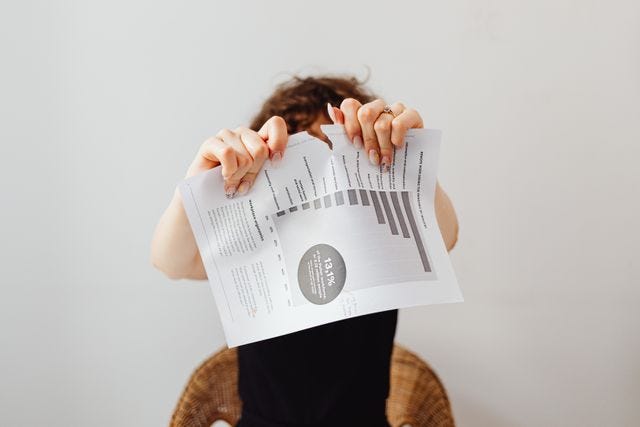
Be Mindful Of The Slop
I personally have produced a lot of documentation and analysis using AI. I am the first person to go to the front defending AI, which enables me to tackle complex tasks at the same time in a fraction of the effort and time.
However, because I use it a lot in my assessments, I understand the dangers that come with it. The devil is in the details.
When I generate a piece of documentation or analysis, I need to go into the weeds to find incongruences in the analysis, or simply perform a sanity check to understand if the structure is solid.
If I have a conclusion, I should confirm the data that generated that output, but also make sure I don’t have outliers that could potentially muck up the waters or hint that something is not well explained.
Because I do this kind of operation a lot, when I receive documentation provided by other actors, I immediately spot voids in the analysis.
For example: cost estimations with 100% variation (saying that a task is done in 5 to 10 days. This is not an estimation, is a wild guess without proper foundations), lacking quality assurance measures and validations in the process and timelines, details that don’t add up in the context where they are explained, etc.
Which means the person who generated the report has shifted the agency of the report to the AI without careful checking.
AI Doesn’t Replace Agency
People are still responsible for the work they produce. AI is just a tool. If someone uses AI to produce a report and sends it to me for decision-making, it is the same as saying, “I built this report”.
So if I find miscalculations or voids in the analysis, those defects have one responsible party: the author.
I don’t care if the person used AI or not. If a report is sent for a decision-making step, and it has clear holes, I hold the person responsible. Not the AI.
There is a clear separation between a tool and a human. Saying that Claude or ChatGPT hallucinated, or didn’t consider X or Y, is the same as saying the author didn’t even bother to read their own report carefully.
The more complex the project or task is, the more challenging this might become for some people. If someone is using AI to produce documentation, it doesn’t change the fact that the author should know the ins and outs of that subject matter.
AI simply helps produce the output, but the responsible author of the work is still the person. Which means the work needs to be reviewed. Diligently.
Cultivate Agency
The teams should be made aware that copy-pasting AI outputs is not a professional way to work and report conclusions.
People should be encouraged to explain out loud their own conclusions and views. Pointing to a report or an md file is only acceptable if the document has information or data to back the view.
A great way to determine if the person read the assessment is asking (casually) for a 2 min conclusion or insight on the report out loud. If the person struggles to build a line of thought or a coherent speech (or if they even refuse and point to the report), this might be a smoking gun that the person didn’t check the output of the report carefully.
The goal is to make people aware that copy-pasting output won’t work. They should be able to explain, dissect, and provide insight nevertheless.
If an engineer cannot defend a document in two minutes without reading it, they didn’t write it. This behavior should not be allowed in the company.
Bad Decisions Are Made With Bad Underlying Data
Why is this a big deal?
Because bad decisions are made when the substance of the information used to make that decision doesn’t hold up to the quality it is supposed to have.
If someone didn’t independently audit the underlying assumptions, that person didn't write an assessment: They ran a prompt. In an executive decision, signing your name to an unverified LLM output is not an efficiency hack. It is negligence.
If, during an important pivot moment, the analysis is flawed, the decision-maker is simply rolling the dice and hoping luck is on their side. This should be avoided at all costs.
Just because someone provided a piece of information doesn’t automatically mean that person made a careful assessment and thought about the output.
Humans make mistakes, and some of those mistakes are lazy ones. With AI being a new tool, a large population is still learning how to work with it.
AI slop is a great shortcut to making mistakes.
Assumptions are the mother of all f%ck-ups.
It has been a wild ride since I published the first article on the SoW. Exchanging views with you and hearing feedback on how these articles have been useful is what drives my motivation to write. Leave a comment, subscribe to the SoW, and be part of the community.
If this article resonates with you, or you know someone who might find it useful, just share the link!
That’s it. If you find this post useful, please share it with your friends or colleagues who might be interested in this topic. If you would like to see a different angle, suggest it in the comments or send me a message.
Cheers,
Artur
That's one major issue for AI usage and AI workflows: Someone needs to be responsible. Some human or organization needs to be held accountable of things go wrong.
In some cases, it might be youself.